

Daftar Isi
We live in a world that celebrates speed. Every day, we are encouraged to work harder, achieve more, and stay productive.
Social media showcases milestones, businesses chase ambitious targets, and individuals constantly seek the next opportunity.
While this relentless pursuit of progress can be motivating, it often comes at a hidden cost: we rarely stop to reflect.
Reflection is one of the most underrated habits in modern life. It is not about dwelling on the past or regretting missed opportunities.
Instead, reflection is the intentional practice of examining our experiences, understanding our decisions, and learning from both our successes and failures.
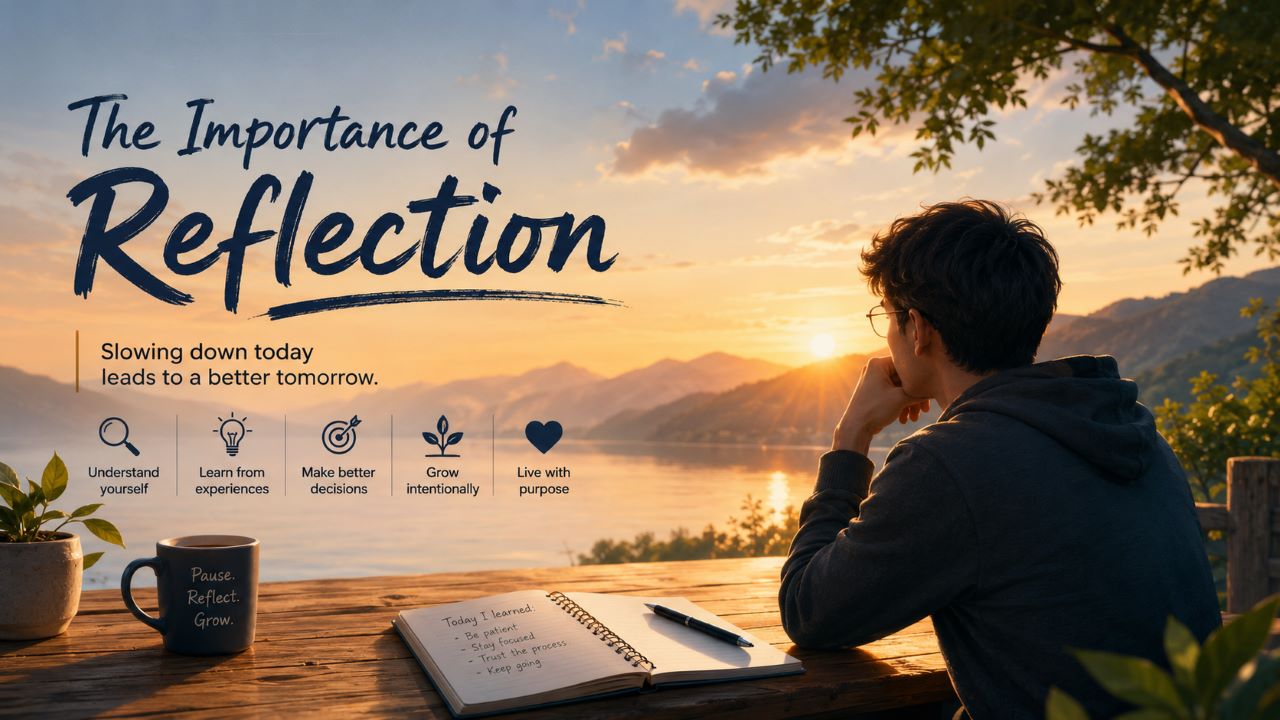
Ironically, slowing down for a few moments can become the fastest way to grow.
A Culture That Rewards Constant Motion
Today’s society often equates busyness with success. Packed calendars, overflowing inboxes, and long working hours are frequently viewed as symbols of ambition and dedication.
Many people fear that taking a break means falling behind.
However, being busy is not always the same as being productive. A person can spend countless hours working toward goals that no longer align with their values or aspirations.
Without reflection, we risk moving quickly in the wrong direction.
Imagine driving a car on a highway without ever checking the map. You may be moving fast, but speed alone does not guarantee that you will reach your intended destination.
Reflection serves as our personal compass, helping us ensure that our efforts are leading us where we truly want to go.
Reflection Is More Than Looking Back
Some people confuse reflection with nostalgia. Looking back simply means remembering what happened. Reflection goes much deeper.
Reflection asks meaningful questions:
- What did I learn from this experience?
- Why did I make that decision?
- What could I have done differently?
- How have I changed because of this situation?
These questions encourage self-awareness, which is one of the most valuable qualities anyone can develop.
When we understand our thoughts, emotions, and behaviors, we become better equipped to make thoughtful decisions instead of reacting impulsively.
Reflection is not about judging ourselves harshly. It is about becoming curious learners of our own lives.
Growth Begins with Honest Reflection
Every experience carries a lesson, but lessons only become meaningful when we take the time to uncover them.
Failure, for example, often feels painful in the moment. Yet many successful individuals later describe their greatest setbacks as turning points.
What transformed failure into growth was not the experience itself, but the willingness to reflect on it.
Likewise, success deserves reflection as well. When something goes well, we should ask ourselves what contributed to that outcome.
Was it careful preparation? Consistency? Effective communication? Understanding our successes allows us to repeat them intentionally rather than relying on luck.
Reflection turns experience into wisdom.
Why Successful People Make Time to Reflect
Many accomplished leaders, entrepreneurs, athletes, and creative professionals share one common habit: they regularly evaluate their performance.
Rather than rushing from one achievement to the next, they pause to assess what worked, what didn’t, and what can be improved. They understand that continuous improvement requires continuous learning.
Reflection also strengthens emotional intelligence. It helps people recognize emotional triggers, manage stress more effectively, and communicate with greater empathy.
These qualities often determine long-term success more than technical expertise alone.
The most successful people are not necessarily those who make the fewest mistakes. They are the ones who learn the fastest from every mistake they make.
Reflection Doesn’t Require Hours
One of the biggest misconceptions about reflection is that it demands a significant amount of time. In reality, even ten minutes of intentional reflection can make a meaningful difference.
Simple practices include:
- Writing a few thoughts in a journal at the end of the day.
- Reviewing weekly accomplishments and challenges.
- Spending a few quiet minutes without digital distractions.
- Asking yourself one meaningful question before going to sleep: “What did today teach me?”
These small habits gradually improve self-awareness and decision-making. Over time, they create a clearer understanding of who we are and who we want to become.
The Hidden Cost of Never Reflecting
When we neglect reflection, we often repeat the same mistakes without realizing it. We become trapped in routines that no longer serve us.
We pursue goals simply because we started chasing them years ago, not because they still matter.
Without reflection, burnout becomes more likely. Constant activity without intentional evaluation can leave us exhausted yet unfulfilled.
We may achieve external success while feeling disconnected from our own purpose.
Reflection acts as a reset button. It allows us to realign our actions with our values before small problems become major regrets.
Final Thoughts
Life is not simply measured by the number of years we live, the goals we accomplish, or the wealth we accumulate. It is also measured by how deeply we understand ourselves along the journey.
Reflection gives meaning to experience. It transforms mistakes into lessons, challenges into opportunities, and ordinary moments into valuable insights.
More importantly, it reminds us that growth is not only about moving forward—it is also about understanding where we have been and why it matters.
In a world that constantly tells us to hurry, perhaps the wisest decision we can make is to pause.
Because sometimes, the fastest way to grow is to slow down and reflect.
Before you move on to your next task, ask yourself one simple question:
“When was the last time I paused—not to rest, but to truly understand the person I am becoming?” (DW)